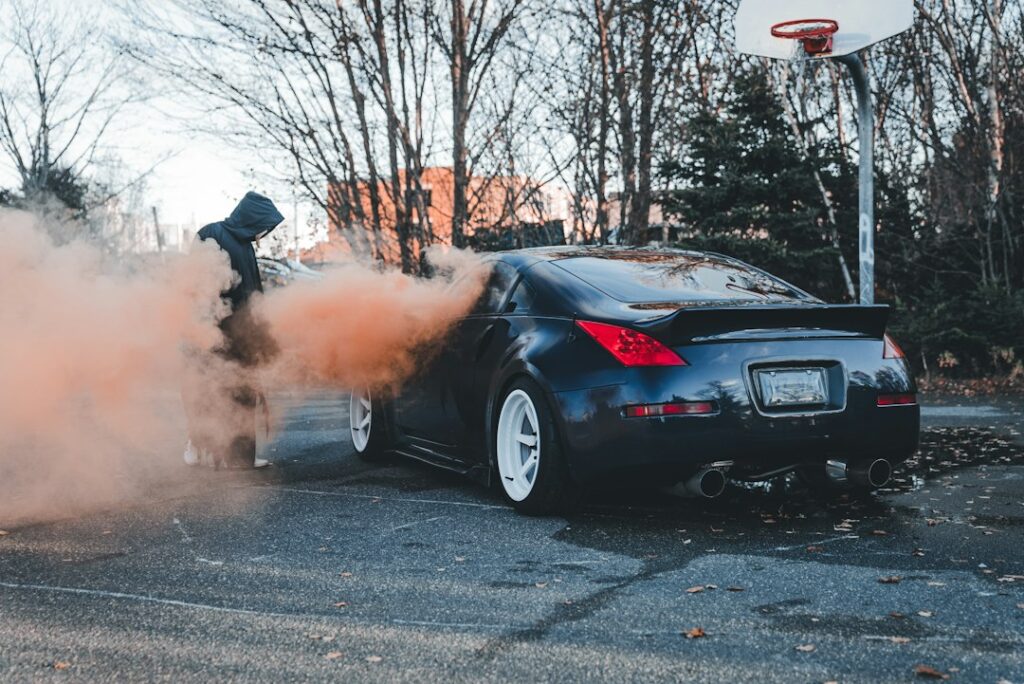
Seeing white smoke coming from the exhaust pipe can be scary, but it is not always bad news. On a cold morning, thin white vapor that disappears after a few minutes is just water condensation burning off. That is completely normal. The kind you should worry about is thick, sweet-smelling white smoke that keeps coming even after the engine warms up. That usually means coolant is getting into the engine. This guide helps you tell the difference and explains each possible cause.
Normal vapor or a real problem?
| What you see | What it usually means |
|---|---|
| Thin, wispy vapor on a cold or damp day that fades after 5 to 10 minutes | Normal condensation. Nothing to fix. |
| Thick white smoke that continues after warm-up | Coolant burning inside the engine |
| Sweet smell from the exhaust | Coolant leak, often a head gasket |
| Coolant level keeps dropping with no visible leak | Internal coolant leak |
| Bluish-white smoke with a burnt oil smell | Oil burning, not coolant |
| White smoke from a diesel at startup, smelling of fuel | Unburned fuel, often injectors or glow plugs |
Common causes of white smoke from the exhaust
1. Condensation (harmless)
Burning fuel makes water as a by-product. When the exhaust system is cold, some of that water collects inside it and leaves as steam once things heat up. You may also see a few drops of clear water dripping from the tailpipe. If it goes away after a short drive, your car is fine.
2. Blown head gasket
This is the most common serious cause. The head gasket seals the gap between the engine block and the cylinder head. If it fails, coolant can leak into the cylinders and burn along with the fuel. Other signs include overheating, bubbles in the coolant reservoir, a rough idle, and milky, light-brown residue under the oil filler cap. Head gaskets often fail after an engine has overheated.
3. Cracked cylinder head or engine block
Severe overheating, or freezing because the coolant mix was too weak, can crack the metal. The symptoms look a lot like a head gasket failure, but the repair is bigger. A mechanic can run a pressure test or a combustion leak test to tell them apart.
4. Leaking intake manifold gasket
On some engines, coolant flows through the intake manifold. When its gasket fails, coolant can be drawn into the engine and burned. It is usually a cheaper repair than a head gasket, which is why proper diagnosis matters.
5. Faulty EGR cooler
Many diesel engines and some gasoline engines use coolant to cool exhaust gases being recirculated. If the EGR cooler cracks inside, coolant ends up in the intake and comes out as white smoke.
6. Fuel problems in diesel engines
On diesels, white smoke that smells like fuel, especially on cold starts, often means fuel is not burning completely. Worn glow plugs, leaking injectors, or incorrect injection timing are common reasons.
Simple checks you can do yourself
- Let the engine warm up fully and see if the smoke stops. If it does, it was condensation.
- With the engine completely cold, check the coolant level in the reservoir. Note it and check again after a few days of driving.
- Look under the oil filler cap and on the dipstick for milky, light-brown sludge.
- Watch the temperature gauge closely on your next drive.
- Carefully smell the exhaust from a safe distance. A sweet smell points to coolant.
- Scan for codes. Misfire codes on one cylinder can support a coolant leak into that cylinder.
Safety note: Never open the radiator or coolant cap while the engine is hot. The system is under pressure and hot coolant can spray out and cause serious burns.
Can you keep driving with white smoke?
If it is only condensation, yes. If it is coolant, driving on can make things much worse. Low coolant leads to overheating, and overheating can warp the cylinder head or destroy the engine. Coolant mixing with oil also ruins the oil’s ability to protect the engine. If the smoke is thick and steady, or the temperature gauge climbs, stop driving and have the car checked.
What about head gasket sealers?
Bottled sealers claim to fix small head gasket leaks. Sometimes they buy a little time on a very minor leak, but they are not a reliable repair. They can also clog parts of the cooling system, such as the heater core or radiator. Treat them as a last resort, not a fix.
How much does it cost to fix?
Condensation costs nothing. An intake manifold gasket or EGR cooler is a moderate to fairly large repair depending on the engine. A head gasket job is labor-heavy and often expensive, and a cracked head or block can cost as much as a replacement engine. On an older car, it is worth comparing the repair price with the car’s value before deciding.
Frequently asked questions
Is white smoke from the exhaust always a head gasket?
No. Most white vapor on cold mornings is just condensation. A head gasket is only likely if the smoke is thick, continues after warm-up, and comes with coolant loss or overheating.
What is the difference between white, blue, and black smoke?
White smoke usually means water or coolant. Blue or bluish-gray smoke means oil is burning. Black smoke means the engine is burning too much fuel.
Why does my car blow white smoke only when I start it?
If it stops within a few minutes, it is most likely condensation. If there is a big puff at every startup, even on warm days, a small coolant leak into a cylinder overnight is possible and worth checking.
Will white smoke turn on the check engine light?
The smoke itself will not, but the problems behind it often do, for example misfires or overheating. See our guide on why your check engine light is on for help reading the codes.
Final thoughts
A little white vapor on a cool morning is nothing to worry about. Thick, sweet-smelling smoke that does not go away is a warning sign that coolant is being burned. Check your coolant level when the engine is cold, look under the oil cap, and keep an eye on the temperature gauge. If the signs point to coolant, get a proper diagnosis before the engine overheats. This guide is general information and does not replace a hands-on inspection.
Leave a Reply