
Your automatic transmission depends on its fluid to shift smoothly, stay cool, and avoid wear. Low or burnt fluid is one of the most common reasons for rough shifting and slipping, and catching it early can save you from a very expensive repair. The good news is that learning how to check automatic transmission fluid at home takes about five minutes and no special tools. The one catch: it is done differently from checking engine oil, so the steps below matter.
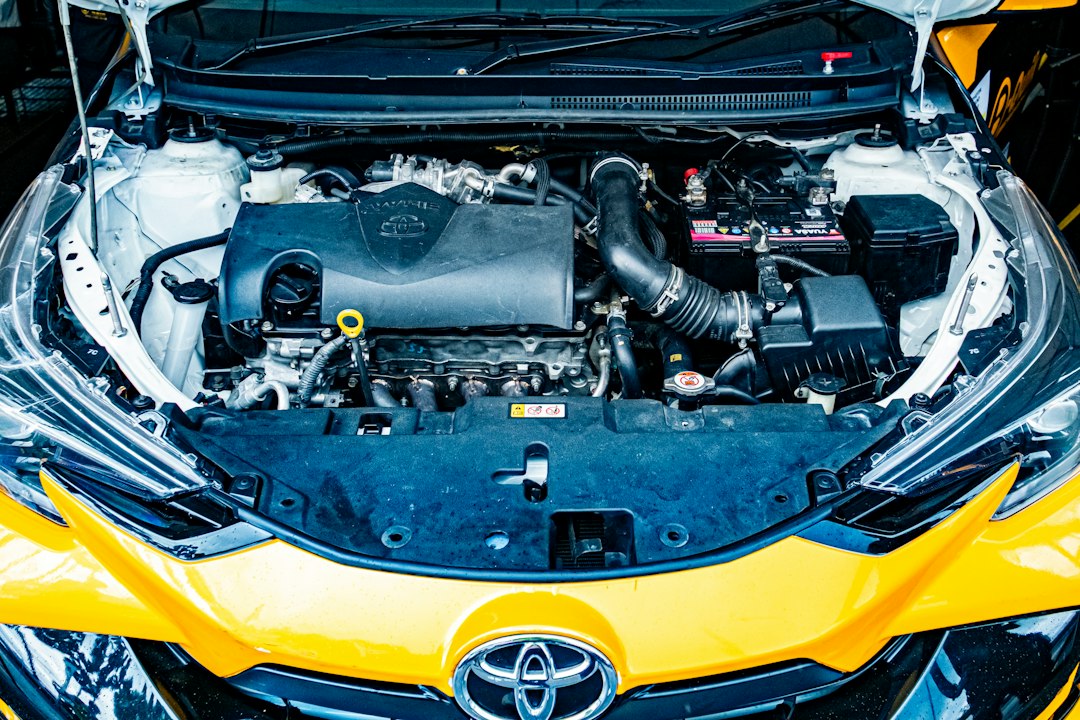
First: does your car have a transmission dipstick?
Many newer cars have a sealed transmission with no dipstick at all. Checking those requires lifting the car and removing a fill plug with the fluid at an exact temperature, which is a job for a shop. Look in your owner’s manual under transmission fluid. If it describes a dipstick, keep reading. If it does not, ask your mechanic to check it during your next service.
What you will need
- A clean, lint-free rag or paper towel
- Your owner’s manual
- A long, thin funnel (only if you need to add fluid)
- The exact transmission fluid type listed in your manual
How to check automatic transmission fluid: step by step
Step 1: Warm up the car
Transmission fluid expands when warm, so most manufacturers want it checked at normal operating temperature. A 10 to 15 minute drive is usually enough.
Step 2: Park on level ground and keep the engine running
Here is the big difference from engine oil: on most cars, the engine stays running while you check. Park on flat ground, set the parking brake firmly, and leave the car in Park. Some models ask for Neutral, and a few ask for the engine to be off, so confirm in your manual.
Step 3: Shift through the gears
With your foot on the brake, slowly move the selector through each gear, pausing a couple of seconds in each, then return to Park. This fills the transmission’s passages so the reading is accurate.
Step 4: Find the dipstick
Open the hood. The transmission dipstick usually has a red, orange, or yellow handle, often marked with a gear symbol or the letters ATF. On front-wheel-drive cars it is often near the back of the engine on one side. Be careful: the engine is hot and running, so keep hands, hair, and loose clothing away from the fan and belts.
Step 5: Pull, wipe, and reinsert
Pull the dipstick out, wipe it clean, push it fully back in, and pull it out again. Now read where the fluid sits.
Step 6: Read the level
Many dipsticks have two ranges, marked HOT and COLD, or a crosshatched area. Since the fluid is warm, use the HOT range. The fluid should sit within it. Below the range means it is low. Above it means overfilled, which can also cause problems.
Step 7: Check the color and smell
Dab a drop onto a white paper towel. The condition of the fluid tells you as much as the level.
| What you see | What it means |
|---|---|
| Bright red or pink, clear, little smell | Healthy fluid |
| Darker red or light brown | Aging fluid. Plan a fluid service soon. |
| Dark brown or black with a burnt smell | Overheated or worn fluid. Have the transmission inspected. |
| Pink and milky or foamy | Coolant or water contamination. See a mechanic right away. |
| Metal flakes or grit | Internal wear. See a mechanic. |
How to add transmission fluid if it is low
- Use only the fluid type in your owner’s manual. The wrong fluid can damage the transmission.
- Put a long funnel into the dipstick tube.
- Add a small amount at a time, roughly a quarter of a quart or liter.
- Wait a moment, then recheck the level.
- Repeat until it reaches the correct range. Stop there and do not overfill.
Remember, transmission fluid does not get used up like fuel. If it is low, there is probably a leak. Look for reddish spots under where you park.
Signs of transmission fluid problems
- Delayed engagement when you shift into Drive or Reverse
- Slipping, where the engine revs but the car does not speed up properly
- Harsh or jerky shifts
- Shuddering at certain speeds (see our guide on car shaking when accelerating at high speeds)
- A burning smell, which our guide on burning smell from a car after driving fast covers in detail
- A transmission warning light or the check engine light
Frequently asked questions
Should I check transmission fluid with the engine on or off?
On most cars with a dipstick, the engine should be running and warm, with the car in Park. A few models are different, so your manual has the final say.
How often should I check transmission fluid?
Checking once a month or every few oil changes is a good habit, plus any time you notice shifting problems.
Can I drive with low transmission fluid?
It is risky. Low fluid causes overheating and wear inside the transmission. Top it up and get any leak fixed as soon as you can.
Is checking transmission fluid the same as checking motor oil?
No. Engine oil is checked with the engine off and cool, while transmission fluid is usually checked warm with the engine running. Read our guide on how often to change your car motor oil for the oil side of things.
Final thoughts
Checking automatic transmission fluid at home is quick and easy once you know the trick: warm engine, level ground, running in Park, and reading the HOT marks. Look at the color as well as the level, use only the fluid your manual specifies, and treat low or burnt fluid as a warning sign. If your car has a sealed transmission, leave the check to a professional.
Leave a Reply