A flat tire always seems to happen at the worst moment: late at night, in the rain, or when you are already running behind. Knowing how to change a flat tire step by step turns a ruined evening into a 20-minute delay. You do not need to be strong or mechanically minded. You just need the right tools, a safe spot, and the steps below in the right order. Read it once now, and you will feel much calmer when it actually happens.
Tools you need (check your trunk today)
- A spare tire with air in it (full-size or a compact “donut”)
- A car jack
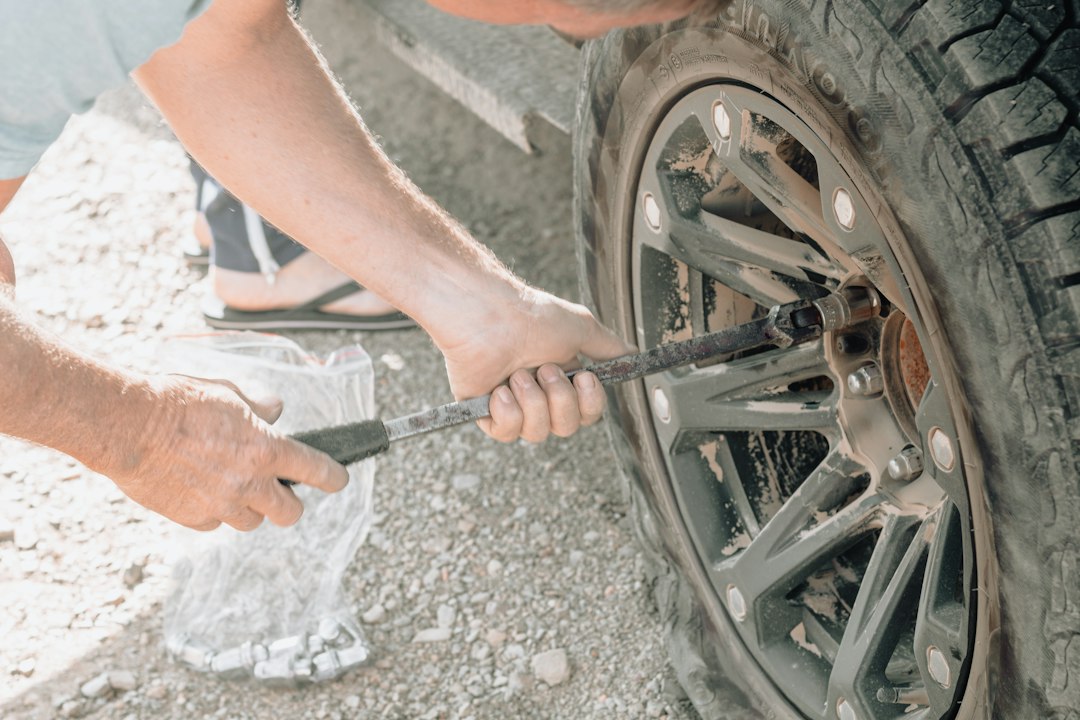
- A lug wrench
- A wheel lock key, if your car has locking lug nuts
- Your owner’s manual
- Helpful extras: gloves, a flashlight, wheel wedges, and a reflective triangle
Some newer cars do not carry a spare at all and come with a tire repair kit instead. It is worth finding out which one you have before you need it.
How to change a flat tire: step by step
Step 1: Get to a safe place
Do not stop right where the tire goes flat if it is unsafe. Drive slowly to a flat, firm spot well away from traffic, like a parking lot or a wide shoulder. Driving a short distance on a flat might damage the wheel, but that is far better than working next to fast traffic. Turn on your hazard lights.
Step 2: Secure the car
Put the car in Park (or first gear on a manual), apply the parking brake firmly, and turn the engine off. Place wheel wedges or a large rock behind the tire diagonally opposite the flat. Have passengers wait somewhere safe, away from the road.
Step 3: Loosen the lug nuts (before jacking)
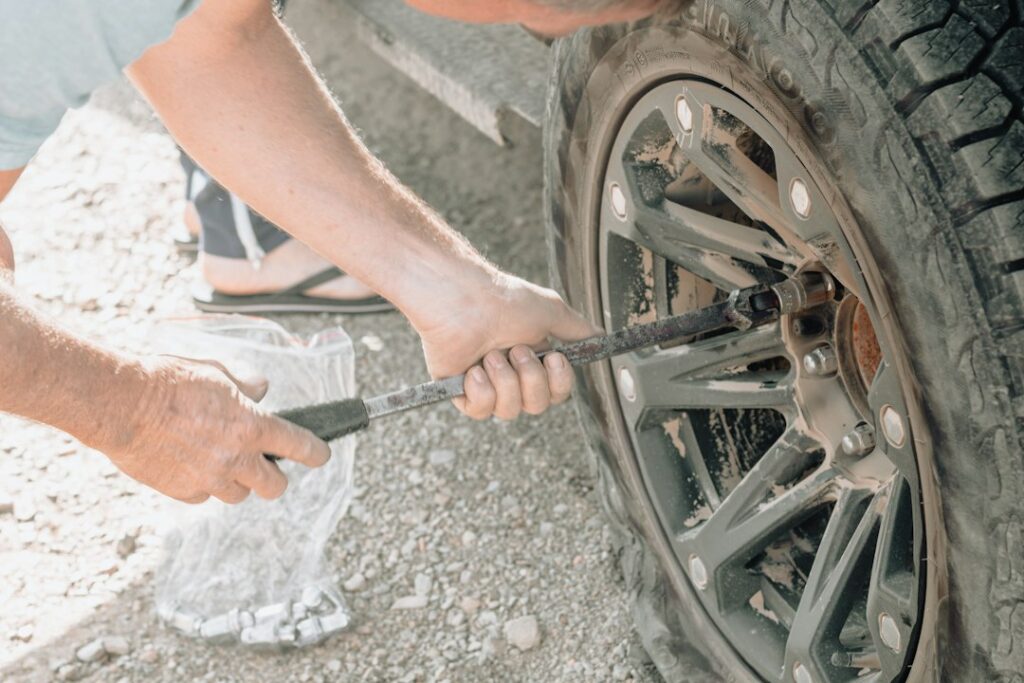
This is the step most beginners get backward. Remove the hubcap if there is one, then turn each lug nut counterclockwise about half a turn while the tire is still on the ground. Do not take them off yet. They can be very tight, so it is fine to step on the wrench handle carefully to use your body weight.
Step 4: Place the jack at the right spot
Your owner’s manual shows the jacking points. They are usually reinforced spots on the metal edge under the doors, near each wheel, often marked with small notches or arrows. Placing the jack anywhere else can damage the car or let it slip.
Step 5: Raise the car
Raise the jack slowly until the flat tire is about 15 cm (6 inches) off the ground. Keep watching that the car stays steady. Never put any part of your body under the car while it is on a jack.
Step 6: Remove the lug nuts and the flat tire
Finish unscrewing the lug nuts and put them somewhere they cannot roll away, like the upturned hubcap. Grip the tire at the sides and pull it straight toward you. Lay it flat on the ground so it cannot roll.
Step 7: Mount the spare tire
Line up the holes in the spare with the wheel studs and push it on until it sits flat against the hub. Screw on the lug nuts by hand, as far as they will go.
Step 8: Snug the nuts in a star pattern
Use the wrench to snug the nuts, but do not fully tighten yet. Go in a star or criss-cross pattern instead of going around in a circle. This pulls the wheel on evenly.
Step 9: Lower the car and tighten fully
Lower the car until the spare touches the ground and takes some weight, then remove the jack. Now tighten each lug nut firmly, again in a star pattern. Go around a second time to make sure none are loose.
Step 10: Pack up and check the pressure
Put the tools and the flat tire in the trunk. Check the spare’s air pressure at the next gas station. Spares often lose air while sitting unused for years.
Driving on a compact spare
A small donut spare is only meant to get you to a tire shop. Most have a speed limit of around 50 mph (80 km/h) and are meant for a limited distance. The exact limits are printed on the spare or in your manual. Braking and handling will feel a bit different, so drive gently and get the original tire repaired or replaced soon.
Common mistakes to avoid
- Jacking the car up before loosening the lug nuts, which makes the wheel spin
- Working on a slope or soft ground
- Placing the jack in the wrong spot
- Forgetting to recheck the lug nuts after driving a short distance
- Driving fast or far on a compact spare
When to call roadside assistance instead
Call for help if you cannot get safely away from traffic, the ground is soft or sloped, the lug nuts will not budge, your spare is flat too, or you simply do not feel safe. There is no shame in it. Your safety matters more than saving time.
Frequently asked questions
How long does it take to change a flat tire?
Around 15 to 30 minutes for a first-timer. It gets much faster with a bit of practice.
Which way do lug nuts loosen?
Counterclockwise to loosen and clockwise to tighten, on almost every car. Remember: righty tighty, lefty loosey.
Can a flat tire be repaired, or do I need a new one?
A small puncture in the main tread can often be repaired. Damage to the sidewall, a large hole, or a tire driven flat for a long distance usually means replacement.
Why does my car shake after changing a tire?
Stop and check the lug nuts first. If they are tight, the spare may be out of balance or the wheel may not be seated properly. Our guide on car steering wheel shaking at 60 mph explains other causes.
Final thoughts
Changing a flat tire comes down to three things: a safe location, loosening the nuts before jacking, and tightening them in a star pattern. Take a few minutes this weekend to find your spare, jack, and wrench, and check the spare’s pressure. If the battery ever lets you down too, keep our guide on how to jumpstart a dead car battery safely handy.
Leave a Reply