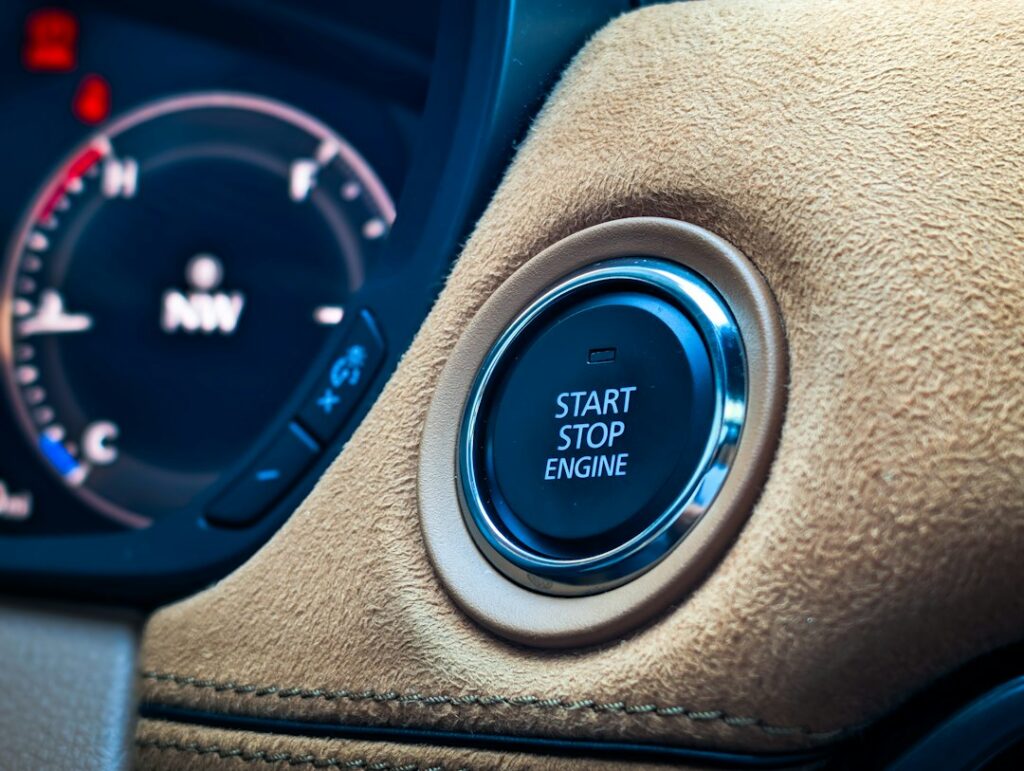
You turn the key or press the start button, the engine spins over and over, but it never catches. If your engine is cranking but won’t start, the good news is that the battery and starter are probably doing their job. The problem is almost always one of three things the engine needs to run: fuel, spark, or air. A fourth, less obvious cause is the car’s own anti-theft system. This guide walks you through the troubleshooting in the same order a mechanic would, starting with the quick checks.
Cranking vs. not cranking: know the difference first
Before you start, make sure you are dealing with the right problem. Cranking means the engine turns over at a normal speed with that familiar rhythmic sound. If you only hear a single click, rapid clicking, or a very slow, tired crank, that points to a weak battery or a starter problem instead. In that case, our guide on how to jumpstart a dead car battery safely is a better place to begin.
Quick guide: match your symptom
| What you notice | Most likely cause |
|---|---|
| No humming sound from the rear when you turn the key to ON | Fuel pump, fuel pump relay, or fuse |
| Strong smell of fuel after cranking | Flooded engine or no spark |
| Security or key light flashing on the dash | Immobilizer not recognizing the key |
| Engine almost starts, then dies | Low fuel pressure, dirty throttle body, or bad sensor |
| Won’t start after rain or a car wash | Moisture in the ignition system |
| Won’t start only when the engine is hot | Failing crankshaft sensor or fuel vapor issue |
Step-by-step troubleshooting
Step 1: Check the obvious things (seriously)
It sounds silly, but a lot of no-start calls end right here. Look at the fuel gauge, and remember gauges can be wrong. Think about whether you filled up recently, because bad or contaminated fuel can cause this too. Also make sure the gear selector is fully in Park, or that the clutch pedal is pressed all the way down on a manual car.
Step 2: Look for a security or key light
Modern cars have an immobilizer that cuts fuel or spark if it does not recognize your key. If a key-shaped or lock-shaped light is flashing on the dashboard, try your spare key. A weak battery in a key fob is a common cause with push-button starts. Many cars let you hold the fob right against the start button to start it even with a dead fob battery. Your owner’s manual will show the exact spot.
Step 3: Listen for the fuel pump
Sit in a quiet place, turn the key to ON without cranking, and listen. You should hear a soft hum or buzz from the back of the car for about two seconds. That is the fuel pump priming the system. If you hear nothing, the pump, its relay, or its fuse may have failed. Check the fuel pump fuse and relay first, since they are cheap and easy to replace. Your owner’s manual lists their locations.
Step 4: Check for a flooded engine
If you smell raw fuel, the engine may be flooded, meaning too much fuel and not enough air. This happens more often after short trips in cold weather or after cranking many times in a row. On most fuel-injected cars, you can press the accelerator pedal all the way to the floor and hold it while cranking for a few seconds. This tells the computer to cut fuel and let air clear it out. Check your manual, because not every car works the same way.
Step 5: Scan for trouble codes
Even if the check engine light is not on, the car’s computer may have stored a code. A crankshaft position sensor fault is a classic reason for an engine that cranks but never fires, because without that signal the computer does not know when to send spark and fuel. A basic scanner plugs in under the dashboard and reads codes in a minute. If you do not own one yet, see our guide to the best OBD2 scanner for DIY mechanics.
Step 6: Inspect the ignition system
No spark means no start. Worn spark plugs, a failed ignition coil, or damp wiring can all stop the engine from firing. If the problem started after heavy rain or washing the engine, moisture is a strong suspect. Letting the car dry out for a few hours sometimes fixes it. Testing for spark safely needs the right tool, so leave this one to a mechanic if you are not experienced.
Step 7: Check the air intake
Air problems are less common, but a badly clogged air filter, a disconnected intake hose, or a faulty mass airflow sensor can make the engine struggle to start. Open the hood and look for loose or cracked hoses between the air filter box and the engine. Rodents chewing on wires and hoses is also more common than most people think.
Step 8: Consider the timing belt or chain
If the engine cranks faster or sounds different than usual, the timing belt may have broken. This is serious. Do not keep cranking, because on many engines this can cause internal damage. Have the car towed to a shop.
Mistakes to avoid
- Cranking for too long. Crank for no more than 10 seconds at a time, then wait about a minute. Long cranking drains the battery and can overheat the starter.
- Spraying starting fluid without care. It can help diagnose a fuel problem, but used wrongly it can cause backfires or engine damage. If you are unsure, skip it.
- Ignoring a fuel smell. A strong smell of fuel around the car may mean a leak. Do not keep trying to start it, and keep any flame or spark away.
When to call a mechanic
Call for help if the fuel pump is silent and the fuse and relay are fine, if you suspect a broken timing belt, if you smell fuel leaking, or if a scanner shows sensor or immobilizer codes you cannot clear. These problems need proper testing equipment, and guessing can cost you more in parts than the diagnosis would.
How much does it cost to fix?
Prices depend on your car and location. A fuse, relay, or key fob battery costs very little. Spark plugs and a crankshaft sensor are moderate repairs. A new fuel pump or a timing belt replacement is usually the most expensive outcome. Always ask for a diagnosis first so you are not paying to replace parts that were fine.
Frequently asked questions
Can a bad battery cause the engine to crank but not start?
Yes, sometimes. A weak battery may have just enough power to crank the engine but not enough to run the fuel pump, injectors, and ignition properly at the same time. If the crank sounds slower than normal, test or charge the battery first.
Why does my car crank but not start when it’s cold?
Cold weather makes fuel harder to vaporize and puts more load on the battery. A weak battery, worn spark plugs, or a faulty coolant temperature sensor often show up first on cold mornings.
Will the check engine light come on if the car won’t start?
Not always. Many no-start faults store a code without turning the light on, which is why scanning is worth it. If the light is on, read our guide on why your check engine light is on.
How long does it take to fix a car that cranks but won’t start?
Simple fixes like a fuse or relay take minutes. A fuel pump or sensor replacement usually takes a few hours at a shop, while a timing belt job can take most of a day.
Final thoughts
When an engine cranks but won’t start, work through it calmly: check the fuel, look for a security light, listen for the pump, and scan for codes. Most of the time you will narrow it down to fuel, spark, or the immobilizer within a few minutes. If the simple checks do not solve it, a mechanic can test fuel pressure and spark properly. This guide is general information and does not replace a hands-on inspection.
Leave a Reply