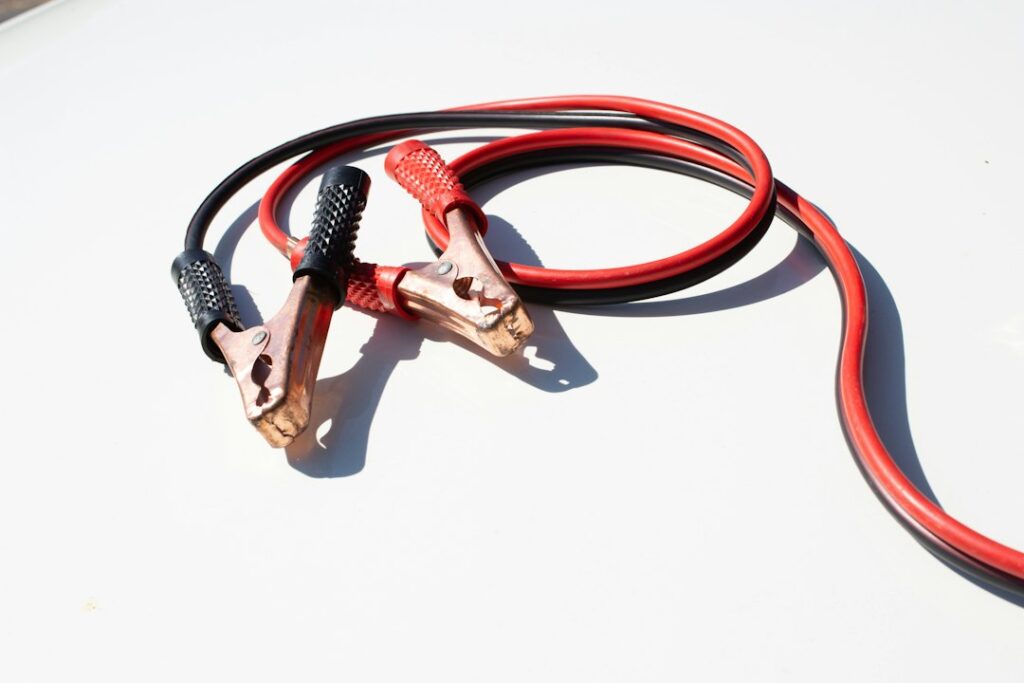
A dead battery is one of the most common reasons a car will not start, and a jumpstart can get you moving again in about ten minutes. You need a second car with a working battery and a set of jumper cables. The most important thing is the order you connect the cables. Do it wrong and you can damage electronics or cause sparks. This guide shows the safe way, step by step.
How do you know the battery is dead?
- The engine makes a slow, weak crank, or only clicks
- The dashboard lights and headlights are dim or do not come on
- The car was fine yesterday, but you left the lights or a door open
- The battery is more than 3 to 5 years old
If the engine cranks normally but will not start, the problem may be fuel or spark, and a jumpstart will not help.
Do not jumpstart if you see any of these
- The battery case is cracked, bulging, or leaking
- The battery is frozen in very cold weather
- You smell rotten eggs near the battery
- Your owner’s manual says not to jumpstart the car
In these cases, call roadside assistance or a mechanic. Also check your owner’s manual first. Some cars, including hybrids and electric vehicles, have special jumpstart points.
What you need
- A set of jumper cables in good condition, with no cracked insulation
- A second car with a healthy battery of the same voltage (most cars use 12 volts)
- Gloves and safety glasses, if you have them
A portable jump starter pack is another option, and you do not need a second car.
How to jumpstart a car: 8 simple steps
- Park the cars close. Park the working car close enough for the cables to reach, but do not let the cars touch. Turn both cars off, put them in park or neutral, and set the parking brakes.
- Open both hoods and find the batteries. The positive terminal is marked with a plus sign and often has a red cover. The negative terminal is marked with a minus sign.
- Connect red to the dead battery. Clip one red clamp to the positive (+) terminal of the dead battery.
- Connect red to the good battery. Clip the other red clamp to the positive (+) terminal of the working battery.
- Connect black to the good battery. Clip one black clamp to the negative (−) terminal of the working battery.
- Connect the last black clamp to bare metal. Clip the final black clamp to a clean, unpainted metal part on the dead car, such as a bolt on the engine block or a metal bracket. Keep it away from the battery and moving parts. This gives a safer ground and avoids sparks near the battery.
- Start the working car and let it run for 2 to 5 minutes. Then try to start the dead car. If it does not start, wait a few more minutes and try again.
- Remove the cables in reverse order. Take off the black clamp from the metal part, then the black clamp from the good battery, then the red clamp from the good battery, and finally the red clamp from the formerly dead battery. Do not let the clamps touch each other while any end is still connected.
Easy way to remember the order
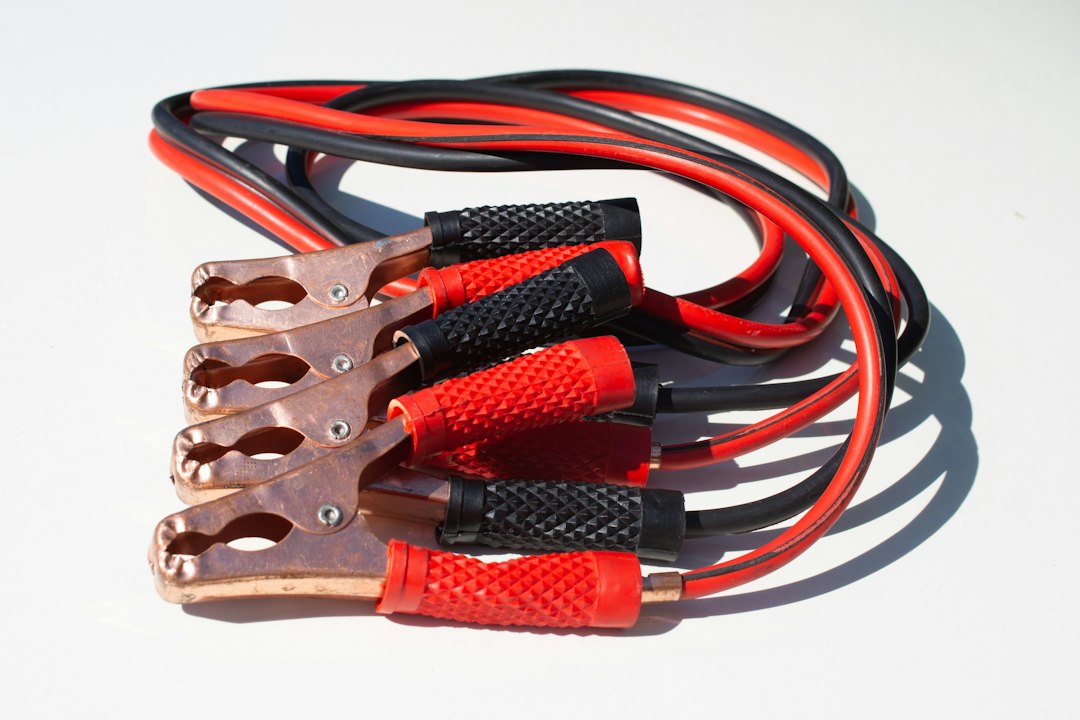
Think of it as: red to dead, red to good, black to good, black to metal. To remove: reverse the order.
What to do after the car starts
- Keep the engine running. Drive for at least 20 to 30 minutes so the alternator can recharge the battery.
- Avoid turning the engine off until you reach a safe place, like home or a repair shop.
- Get the battery tested. Many auto parts stores test batteries for free.
Common jumpstart mistakes
- Connecting the cables in the wrong order
- Letting the metal clamps touch each other
- Clipping the last black clamp to the dead battery’s negative terminal instead of bare metal
- Trying to start the car too soon, before the good battery has had a few minutes
- Using damaged or very thin cables
What if the car still will not start?
Check these things before you try again:
- Make sure the clamps have a firm, clean grip. Rust or white powder on the terminals can block the current.
- Let the working car run a little longer to give more charge.
- If the car starts and then dies again quickly, the alternator may not be charging.
- If nothing happens at all, the battery may be too damaged, or the starter may be faulty.
If you have tried twice with no success, stop and call roadside assistance. Repeated attempts can damage the starter or the other car.
How to avoid a dead battery
- Test your battery once a year after it is 3 years old.
- Turn off lights and accessories when you leave the car.
- Take longer drives sometimes. Many short trips do not fully recharge the battery.
- Keep the terminals clean and tight.
- Replace an old battery before winter, when cold weather makes weak batteries fail.
- Keep jumper cables or a portable jump starter in your trunk.
Frequently asked questions
How long should I let the cars run before starting the dead one?
Usually 2 to 5 minutes is enough. If the battery is very low, wait a little longer.
Can I jumpstart a car in the rain?
It can be done if you take care, keep the cable ends dry, and avoid standing in water. If it is a heavy storm, waiting or calling for help is safer.
Can jumpstarting damage my car?
If done in the correct order, risk is low. Wrong connections can damage electronics or the battery, so follow the steps and check your manual.
How long does a jumpstart last?
A jumpstart only gets the engine running. The battery still needs to recharge by driving, or it may need to be replaced.
Final thoughts
Jumpstarting a car is simple if you follow the right order and stay careful. Red to dead, red to good, black to good, black to bare metal. After the car starts, keep driving and get the battery tested. If anything looks damaged, leaking, or confusing, call a professional. This guide is general information. Always check your owner’s manual for your specific car.
Leave a Reply